
Fire Ant Biosecurity — Zone Checker 2026
Is my suburb in the Queensland fire ant biosecurity zone? (July 2026 update)
⚠ Zones updated monthly — the map below reflects conditions as of July 2026. Always verify your address at fireants.org.au
Biosecurity Queensland confirmed new fire ant detections in June 2026 at Cotswold Hills (Toowoomba), Kunda Park (Sunshine Coast), and Binna Burra (Scenic Rim). A 5-kilometre biosecurity zone has been established around each detection. Homeowners and businesses in surrounding suburbs should check their status immediately. The biosecurity zone map is updated monthly.
How to check if your property is in a fire ant biosecurity zone
The only authoritative source for your property's current fire ant zone status is the Queensland Government's official Fire Ant Zone Checker, available at fireants.org.au. Enter your full address or lot on plan number to receive an immediate determination of whether your property falls within a current biosecurity zone and which movement controls apply.
Do not rely on information from neighbours, real estate agents, or previous searches. The zones are reviewed and expanded monthly as new detections are confirmed. A suburb that was outside the zone last month may be inside it today.
Current zone coverage — July 2026
Fire ant biosecurity zones in South East Queensland now cover an extensive and expanding geographic area. The zones are centred on confirmed detection locations and extend outward based on the probability of colony spread and the eradication program's containment strategy.
| Region | Key Affected Areas (July 2026) | Zone Type |
|---|---|---|
| Ipswich / South East | Springfield, Ripley, Yamanto, Brookwater, Goodna, Redbank Plains | Biosecurity Zone |
| Brisbane (South) | Sunnybank, Eight Mile Plains, Carindale, Rochedale | Biosecurity Zone |
| Logan | Marsden, Slacks Creek, Logan Central, Woodridge | Biosecurity Zone |
| Lockyer Valley | Laidley, Plainland, Gatton, Helidon | Biosecurity Zone |
| Moreton Bay | Morayfield, Caboolture, Narangba, Deception Bay | Biosecurity Zone |
| Toowoomba (NEW June 2026) | Cotswold Hills — 5km radius established | New Biosecurity Zone |
| Sunshine Coast (NEW June 2026) | Kunda Park — 5km radius established | New Biosecurity Zone |
| Scenic Rim (NEW June 2026) | Binna Burra — 5km radius established | New Biosecurity Zone |
This table reflects known zone boundaries as of July 2026. Verify your specific address at fireants.org.au — the official map is the only legally authoritative source.
What are you legally required to do if you are in a zone?
Being within a fire ant biosecurity zone imposes specific legal obligations under the Biosecurity Act 2014. These are not guidelines — they are enforceable law, with penalties for non-compliance reaching hundreds of thousands of dollars for serious breaches.
Obligation 1: Report sightings within 24 hours
Any person who suspects they have found a fire ant nest — anywhere in Queensland, not just within a zone — is legally required to report it to Biosecurity Queensland within 24 hours via the dedicated hotline.
Biosecurity Queensland Fire Ant Hotline
Available 24 hours a day, 7 days a week
Report suspected fire ant sightings within 24 hours
Obligation 2: Comply with movement controls
Within a biosecurity zone, the following materials cannot be moved out of the zone without a valid Biosecurity Certificate issued by Biosecurity Queensland:
- Soil, including potting mix, garden soil, compost, mulch, and sand
- Turf and sod
- Plants with soil attached to roots
- Garden waste including grass clippings, leaf litter, and prunings
- Machinery, vehicles, and equipment that have been in contact with soil
- Shipping containers, trailers, and large removable objects that have been standing on soil
- Certain building materials including pavers, rocks, and fill material
Moving a trailer load of garden soil, a load of mulch, or a concrete pump from within a fire ant zone to an address outside the zone without a Biosecurity Certificate is a breach of the Biosecurity Act 2014. Penalties apply to individuals, not just businesses. This applies even if you personally believe the material is fire ant-free.
What to do if you find a fire ant nest
Do not disturb the nest
Red Imported Fire Ants are highly aggressive when their nest is disturbed. A single nest can contain up to 500,000 individuals. Disturbance triggers a mass stinging response. Do not prod, kick, or pour anything on the nest. Back away carefully and keep children and pets away from the area.
Photograph the nest and its location
Take photographs of the nest mound, the surrounding area, and note the GPS location if possible. The mound structure is distinctive — fire ant nests have no central entry point on the mound surface; instead, they feature a domed, soil-textured mound with multiple subsurface galleries. Fire ants in Queensland often build flatter, less prominent mounds than the classic round mounds seen in North America.
Report to Biosecurity Queensland within 24 hours
Call 13 22 68 or submit a report via the Biosecurity Queensland website. Provide your address, photographs, and a description of the nest and any ant activity. Biosecurity Queensland will prioritise the response based on the detection location relative to existing zone boundaries.
Contact a licensed pest manager for treatment
Jets Pest Control applies APVMA-approved Fipronil direct nest injection for confirmed fire ant nests on residential and commercial properties across Ipswich and Brisbane. We prepare and lodge all mandatory Biosecurity Queensland reporting, chemical application records, and photographic evidence on your behalf, ensuring your property's compliance is fully documented.
How to identify Red Imported Fire Ants
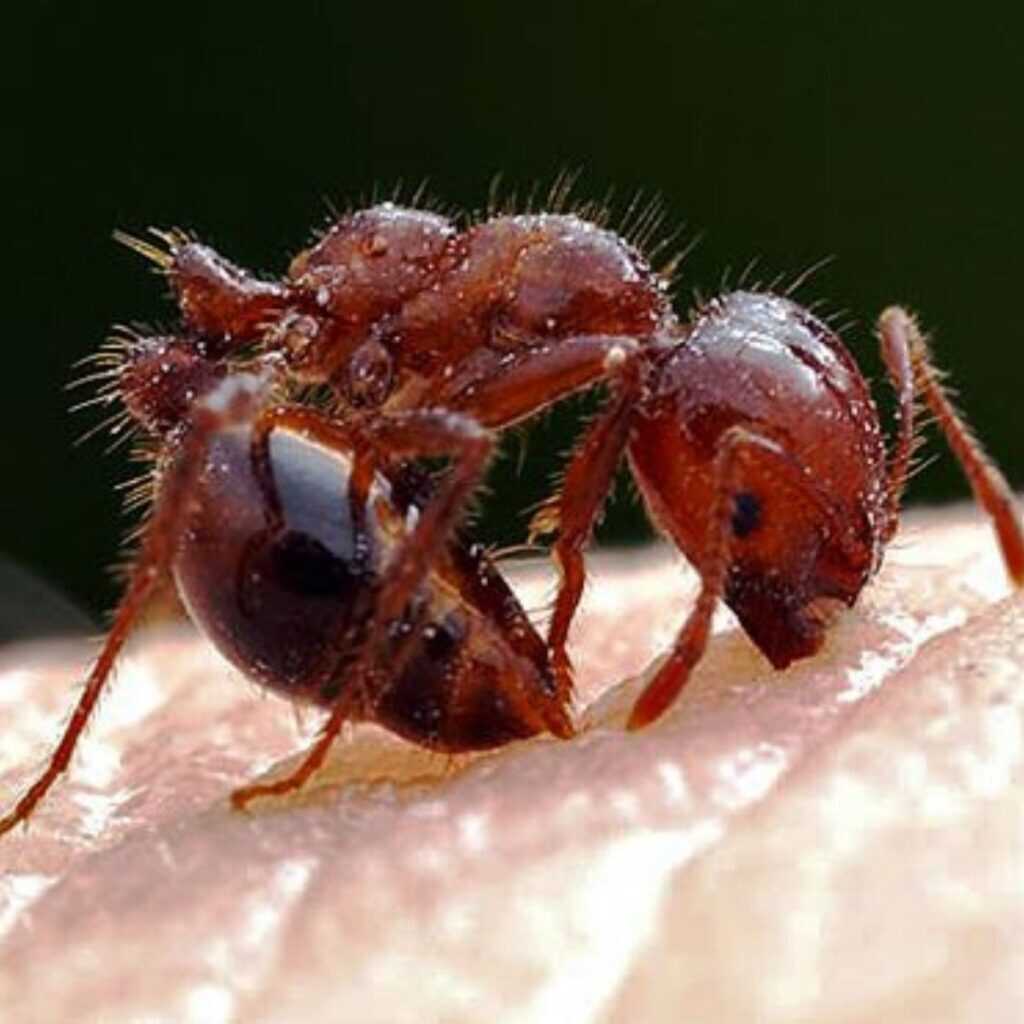
Red Imported Fire Ants (Solenopsis invicta) are a small to medium-sized ant species with several distinctive identifying characteristics that separate them from native Queensland ant species.
- Colour: Reddish-brown body with a darker abdomen — distinct from the uniformly black or yellow species common in Queensland gardens
- Size: Workers vary significantly in size within the same nest — 1.5mm to 5mm — which is unusual among ant species and a key identifier
- Mound structure: Loose, soil-textured mound with no central opening; multiple subsurface entry points; mounds are often located in open sunny areas including lawns, paddocks, and garden beds
- Behaviour: Rapid, aggressive response to nest disturbance — workers pour out of the mound in large numbers within seconds of any vibration
- Sting: Immediate burning pain followed by white fluid-filled pustules at each sting site within hours
Jets Pest Control is licensed to apply APVMA-approved Fipronil direct nest injection for fire ant eradication across Ipswich and Brisbane. All mandatory Biosecurity Queensland reporting, chemical application records, and photographic compliance documentation are prepared and lodged on behalf of the client. This ensures full legal compliance for residential and commercial properties within biosecurity zones.
Found fire ants? We handle everything.
Fipronil direct nest injection. Biosecurity Queensland reporting. Full compliance documentation. Ipswich and Brisbane.
Book TreatmentFrequently asked questions
How do I check if my suburb is in a fire ant biosecurity zone in Queensland?
What suburbs are currently in the fire ant biosecurity zone in 2026?
What are you not allowed to do in a fire ant biosecurity zone?
Are there fines for breaking fire ant biosecurity rules?
What does a fire ant sting feel like?
Can I treat fire ants myself in Queensland?
Ready to protect your home?
Serving Ipswich and South East Queensland — fixed prices, no hidden extras, 10% off for Seniors, Pensioners, and ADF members.
Call 1300 566 569
