
Jets Pest Control · Cockroach Guide
Australian cockroach control, done properly.
The big reddish-brown cockroach you find in the roof void and the garden. It lives outdoors and comes inside — so this guide explains why, and how we keep them out with a treated barrier that's backed by a warranty.
Australian cockroaches, by the numbers
Australian cockroaches (Periplaneta australasiae) are a common pest across Ipswich, Logan and Brisbane's western suburbs. These large insects thrive in the warm, humid conditions of South East Queensland and, while they live mainly outdoors, they readily move into homes and businesses seeking food, moisture and shelter. This guide explains how to identify them, why they behave the way they do, the health risks they bring, and how Jets Pest Control keeps them out.
What are Australian cockroaches?
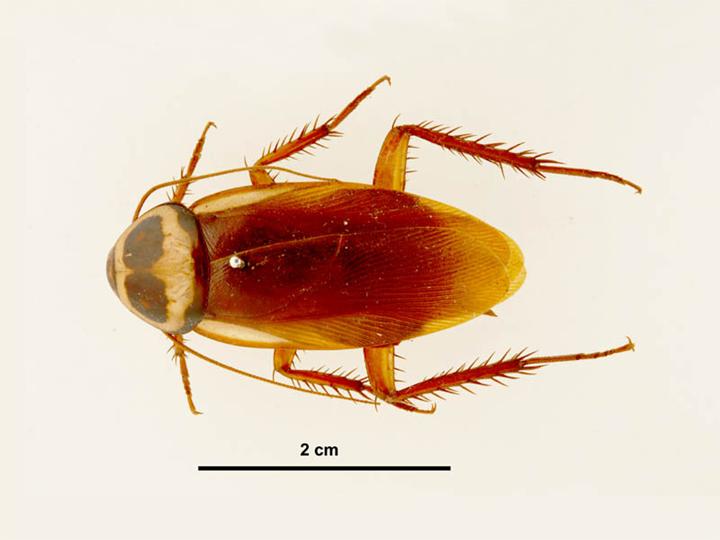
Australian cockroaches are large insects, typically 30–35 mm long. Similar in shape to the American cockroach but a darker brown, they're identified by a clearly defined yellow margin around the pronotum (the shield behind the head) and distinct yellow streaks along the leading edge of the forewings. The wings cover the abdomen, and adults fly readily in warm weather.
Despite the name, they aren't originally Australian — like most pest cockroaches they spread from the tropics and are now widespread through warm, subtropical regions, including South East Queensland.
An outdoor breeder
The Australian cockroach life cycle
Australian cockroaches develop through three stages, and they're slow breeders compared with the German cockroach. Because they breed mainly outdoors and re-enter from the garden, lasting control means treating the outside as much as the inside.
Each egg case holds around 16–24 eggs, and a female may produce 12–20 of them. Nymphs moult ten to twelve times and take six to twelve months to mature, with adults then living a further four to eight months.
Why are Australian cockroaches difficult to control?
- They live outdoors. Their real home is the garden — mulch, compost, woodpiles, under bark and among moist, decaying vegetation — as well as subfloors, garages, sheds and fence lines. Indoor sightings are usually insects that have wandered in, so treating only inside never solves the problem.
- They come in with the weather. Heavy rain and extreme heat drive them indoors in numbers, looking for shelter and moisture — which is why activity often spikes after a downpour.
- They fly and they climb high. Flying readily in warm weather and favouring high, hard-to-reach spots like roof voids and wall cavities, they reach places ground-level treatments miss.
- There's a constant reservoir outside. With a large outdoor population always ready to move back in, control is about maintaining a treated barrier, not a one-off spray.
Health risks of Australian cockroaches
Australian cockroaches aren't just a nuisance — they're a genuine health concern. A single cockroach can carry several million bacteria on its body, and as it travels from drains, subfloors and garden debris onto your surfaces it can pick up and spread organisms behind food poisoning and gastroenteritis. Their droppings, cast skins and saliva are also common allergens that can trigger allergic reactions and aggravate asthma, particularly in children, the elderly and anyone with respiratory conditions.
Where Australian cockroaches hide
Outdoors
Garden beds, mulch and compost, woodpiles, under bark, leaf litter, subfloors, garages, sheds, and along fence and wall lines.
Indoors
Roof voids, wall cavities, behind and under appliances, and damp areas such as kitchens, bathrooms and laundries — usually after moving in from outside.
How Jets Pest Control treats Australian cockroaches
We use an integrated pest management (IPM) programme that follows the four pillars recognised across the industry: a thorough inspection and survey, a high standard of sanitation, insecticides applied to maximise contact with the cockroaches, and follow-up inspection and monitoring. Because this is an outdoor species, the treatment is weighted towards the exterior and the voids they travel through.
- 01
Detailed inspection
Using a torch and probe, we identify activity and harbourage both outdoors (gardens, mulch, compost, woodpiles, subfloors, fence lines) and indoors (roof voids, wall cavities, kitchens, bathrooms and laundries).
- 02
External perimeter & barrier treatment
We apply a non-repellent residual insecticide to the building exterior, foundations, eaves, around doors and windows, entry points and the adjacent ground, plus wall and fence lines. Because it's non-repellent, cockroaches can't detect it — they crawl through, pick up a lethal dose and carry it back to others. The effect isn't immediate, but it's inevitable after exposure.
- 03
Internal residual treatment
Where needed, we treat internal skirting boards, cracks and crevices and subfloor areas the same way.
- 04
Dusting of voids
Into roof voids, wall cavities and other dry, hard-to-reach spaces where wet sprays aren't suitable, we apply an insecticidal dust. Cockroaches pick it up as they move through and during grooming, giving long-lasting control in exactly the high, concealed spots this species favours.
- 05
Monitoring & follow-up
We track activity and, because this is a warranted general pest treatment, return within the warranty period if needed.
- Remove and secure all pets away from the treatment areas.
- Close all windows and doors during the treatment.
- Anyone with allergies, sensitivities or medical conditions should leave until the treatment is dry.
- Keep off treated areas until they're completely dry — usually two to four hours, depending on the weather.
The treatment is not a repellent, so you may notice increased activity for a short time as cockroaches move across treated surfaces and are exposed. Activity can also rise after heavy rain as outdoor insects shelter indoors. Both settle as the barrier does its work.
How to prevent Australian cockroaches
- Keep mulch, compost, woodpiles and dense plantings away from the walls of the house.
- Clear leaf litter and garden debris, especially against the foundations and in subfloor areas.
- Fix leaks and reduce moisture; they're strongly drawn to damp.
- Seal cracks and gaps, and screen weep holes, vents and roof-void access points.
- Keep kitchens clean, store food securely and manage rubbish bins.
- Reduce or reposition outdoor lighting, which draws them in on warm nights.
- Book regular treatments to keep the protective barrier in place through the warm, humid months.
Pricing, warranty & discounts
Australian cockroaches are covered under our General Pest Control service, which is priced by property size:
| Tier | Property | From | Service time |
|---|---|---|---|
| GP1 | Apartment, flat or van | $185 | 30–45 minutes |
| GP2 | Townhouse or duplex | $235 | 45–60 minutes |
| GP3 | House, 1–4 bedrooms | $285 | 1.25–1.5 hours |
| GP4 | House, 5 bedrooms | $335 | 1.75–2 hours |
| GP5 | House, 6+ bedrooms | $385 | 2.5+ hours |
Your treatment is backed by a 12-month limited warranty. It stays fully effective for around three to six months externally and six to twelve months internally, and you keep the benefit of the residual barrier for up to 12 months as new colonies try to move in. If covered pests return within the warranty period, we come back. Treatments need time to work and are subject to legal limits on how often insecticides can be applied within a 12-month period.
This general pest treatment covers American and Australian cockroaches, black house ants, common spiders (redback, black house and daddy-long-legs) and silverfish. German cockroaches, fleas, ticks, rodents and wasps are handled under separate specialist services.
A 10% discount is available for Seniors, Pensioners and Australian Defence Force members (serving and retired). Discounts apply to your principal place of residence, including tenants in rental properties, but not to investment properties. One discount applies per visit.
Frequently asked questions
How do Australian cockroaches enter homes?
Through open doors and windows, roof voids, weep holes, vents and cracks in the foundations — especially during heavy rain or extreme heat.
What attracts them?
Moisture, warmth and food. Standing water, leaks, garden debris, food crumbs and poor sanitation all create ideal conditions.
Are they harmful?
Yes. They can carry and spread bacteria such as Salmonella and the organisms behind gastroenteritis, and can trigger allergies and asthma.
Can Australian cockroaches fly?
Yes — they fly readily in warm weather, though they more often crawl when seeking food or shelter.
How does Jets treat infestations?
With a non-repellent residual barrier outside and in, plus insecticidal dust in roof voids and wall cavities, so cockroaches contact the treatment as they move through.
How long does the treatment last?
The treatment stays fully effective for around three to six months externally and six to twelve months internally, diminishing over time with weather and cleaning — and the residual barrier keeps providing some benefit for up to 12 months under the warranty.
Will the treatment keep cockroaches away?
It isn't a repellent — cockroaches must crawl through treated areas to be affected, so you may see brief, increased activity as they're exposed.
Why is there more cockroach activity after rain?
Heavy rain drives outdoor cockroaches indoors for shelter, so you'll often notice more of them after a downpour.
Do you offer a warranty?
Yes — a 12-month limited warranty. If covered pests return within that period, we come back. (Treatments need time to work and are subject to legal limits on how often insecticides can be applied within a 12-month period.)
Do you offer discounts?
Yes — 10% for Seniors, Pensioners and ADF members (serving and retired), on your principal place of residence including tenants. Not available on investment properties. One discount per visit.
What should I do if I see cockroaches after treatment?
Some activity is normal as the treatment works. If the problem persists, contact us for a follow-up within your warranty period.
The bottom line
Australian cockroaches are resilient, outdoor-dwelling pests, but with the right barrier-based plan they're very manageable. Jets Pest Control provides expert, warranted treatments across Ipswich, Logan and Brisbane's western suburbs, designed for long-term results.
Dealing with cockroaches? Get professional treatment that works.
Serving Ipswich and South East Queensland — fixed prices, no hidden extras, 10% off for Seniors, Pensioners, and ADF members.

