
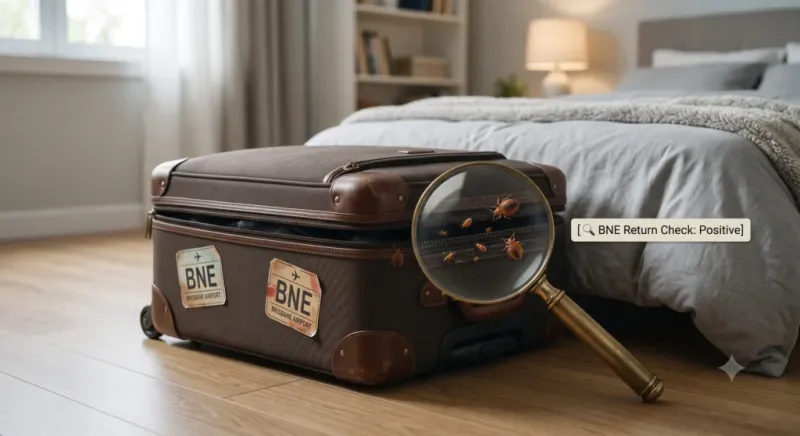
Can Bed Bugs Travel Home With You From Brisbane Hotels?
Jets Pest Control · Ipswich & South East Queensland
Yes — and it happens more often than most travellers expect. A weekend on the Brisbane or a business trip to Brisbane is enough to pick up a bed bug hitchhiker that turns into a full infestation at home. Understanding how they travel and what to check can protect your household.
How bed bugs travel between locations
Bed bugs do not fly and they cannot jump. They spread exclusively by hitchhiking on luggage, clothing, bedding, secondhand furniture, and personal items. Hotels, motels, and short-stay accommodation are high-risk environments because they see a constant turnover of guests — each one potentially bringing bed bugs in or taking them out.
The Brisbane is one of Queensland's busiest tourist destinations, with millions of overnight stays recorded each year. High occupancy rates mean hotel rooms are cleaned and turned over quickly, which creates windows where bed bugs can migrate from one guest's belongings to the next without detection. Inexpensive accommodation and backpacker hostels carry the highest risk, but five-star hotels are by no means immune — a single infested guest can seed a room regardless of star rating.
Where bed bugs hide in hotel rooms
Bed bugs favour harbouring close to where people sleep. In hotel rooms, the highest-risk locations are:
- The mattress seams, piping, and tag area — these are the most common harbouring sites
- The box spring or bed base, particularly where the fabric meets the frame
- The bed frame joints, screw holes, and headboard crevices
- Behind the bedside table and inside its drawer runners
- Along the skirting board immediately adjacent to the bed
- Inside upholstered chairs or couches in the room
They are rarely found in bathrooms, kitchens, or open spaces. The heat from a sleeping body is what draws them to the bed area, and proximity to a host is what keeps them there.
How to inspect a hotel room before unpacking
The single most effective protective step you can take is to inspect the room before you set anything down. Do not place your luggage on the bed or carpet until you have checked the sleeping area. Use the luggage rack in the bathroom — hard, non-fabric surfaces are less hospitable and easy to check.
Step-by-step room inspection
- Pull back the bedding to expose the bare mattress. Look along all seams, particularly at the corners.
- Lift the mattress slightly and inspect the area between the mattress and the box spring.
- Check the headboard — if it is wall-mounted, look at the gap between the headboard and the wall. If it is freestanding, look at the back surface.
- Examine the bedside tables — open the drawer and look at the runners and inside corners.
- Check the carpet edge near the bed along the skirting board.
You are looking for:
- Live bugs — flat, oval, reddish-brown insects roughly the size of an apple seed (about 4–5 mm)
- Dark spots — faecal staining appears as clusters of small, dark dots on fabric, similar to a felt-tip pen mark
- Shed skins — pale, translucent casings that look like empty bug shells
- Blood smears — rusty red streaks or spots on sheets from crushed bugs
- Eggs — tiny (1 mm), white, and very difficult to see without magnification
Tell the front desk immediately and request a different room — ideally not the adjacent room or directly above or below, as bed bugs travel through wall voids and floor cavities. Document everything with photographs before moving your belongings. If the hotel does not respond satisfactorily, report to the accommodation rating authority and seek a full refund.
How to prevent bringing them home
Even in rooms that appear clean, there are precautions worth taking throughout your stay:
- Store your suitcase in the bathroom on the luggage rack rather than on carpet or the bed
- Use sealable plastic bags inside your luggage to keep dirty clothing separate from clean items
- Avoid draping clothing over the bed or Upholstered furniture
- Keep your shoes off the floor near the bed
When you return home
Your return from any multi-night stay in shared accommodation warrants a specific routine, regardless of whether you saw any signs of bed bugs:
- Do not bring your luggage into the bedroom — unpack in a garage, laundry, or on a tiled floor away from soft furnishings
- Wash all clothing immediately on the hottest cycle suitable for the fabric — 60°C kills all life stages of bed bugs
- Dry on high heat for at least 30 minutes — heat penetration through the dryer is highly effective even at lower wash temperatures
- Vacuum your luggage thoroughly — pay close attention to the seams, wheels, and any fabric pockets. Immediately seal and dispose of the vacuum bag outside
- Store luggage away from the bedroom — the best long-term storage is in large zip-lock bags in a garage or storage room
Items that cannot be washed can be placed in a sealed black plastic bag and left in direct Queensland sunlight for several hours. The internal temperature needs to reach at least 46°C for 90 minutes or more to kill all life stages. This approach works well for shoes, books, and small accessories that you cannot put through a dryer.
Signs you have brought bed bugs home
If bed bugs have hitched a ride in your luggage, you may not notice the early signs for several weeks. A small founding population feeds once every 5–10 days, so the initial bites can be infrequent and easy to dismiss as mosquito bites or allergic reactions.
The early warning signs to watch for in the weeks following travel include:
- Itchy welts appearing in lines or clusters on exposed skin, particularly arms, neck, and shoulders — the pattern of three bites in a row is commonly associated with bed bugs
- Waking with bites you did not have when you went to sleep
- Small blood spots on your sheets or pillowcase
- A faint, sweet, musty odour in the bedroom (only noticeable in established infestations)
- Dark spotting on the mattress seam or,headboard
Consumer-grade bed bug sprays do not penetrate the harbouring sites where bed bugs congregate, and resistance to some active ingredients is increasingly common. DIY treatment delays effective intervention and allows the population to grow, which makes eventual professional treatment more complex and more expensive. At the first sign of an infestation, call a licensed pest manager.
What professional bed bug treatment involves
Professional bed bug treatment in residential properties in Queensland typically uses one or more of the following approaches:
- Residual chemical treatment — commercial-grade insecticide applied to all harbouring sites, including mattress seams, bed frames, skirting boards, and furniture. Requires the occupants to be out of the room for a period following treatment and involves follow-up inspections.
- Steam treatment — high-temperature steam applied directly to harbouring sites kills bed bugs and eggs on contact. Used in conjunction with residual chemicals for high-risk areas where chemical penetration is limited.
- Mattress and base encasements — fitted covers that trap any surviving bugs inside and prevent reinfestation. Recommended following treatment to protect the mattress and extend its serviceable life.
A single treatment is rarely sufficient for an established infestation. Professional programs include a follow-up inspection 10–14 days later to treat any newly hatched nymphs that were not exposed in the first application. Bed bug eggs are highly resistant to most insecticides, so the follow-up treatment is essential.
Do
- Inspect hotel rooms before unpacking
- Store luggage on hard surfaces away from the bed
- Wash and dry all clothing on high heat after travel
- Unpack travel bags away from the bedroom
- Call a professional at the first sign of infestation
Don't
- Place luggage on the hotel bed or carpet
- Bring an infested hotel mattress or furniture home
- Rely on consumer aerosols to treat an infestation
- Ignore bites hoping they will resolve on their own
- Move items to other rooms — this spreads the infestation
Frequently asked questions
Can I get bed bugs from a Brisbane Airbnb as well as hotels?
How long does it take for a bed bug infestation to become noticeable?
Can bed bugs live in my car?
Do bed bugs spread through apartment walls?
Does Jets Pest Control treat bed bug infestations in Ipswich?
Suspect bed bugs after a recent trip?
Jets Pest Control provides bed bug inspections and treatment across Ipswich and South East Queensland. Early intervention is significantly more straightforward than treating an established infestation.

