
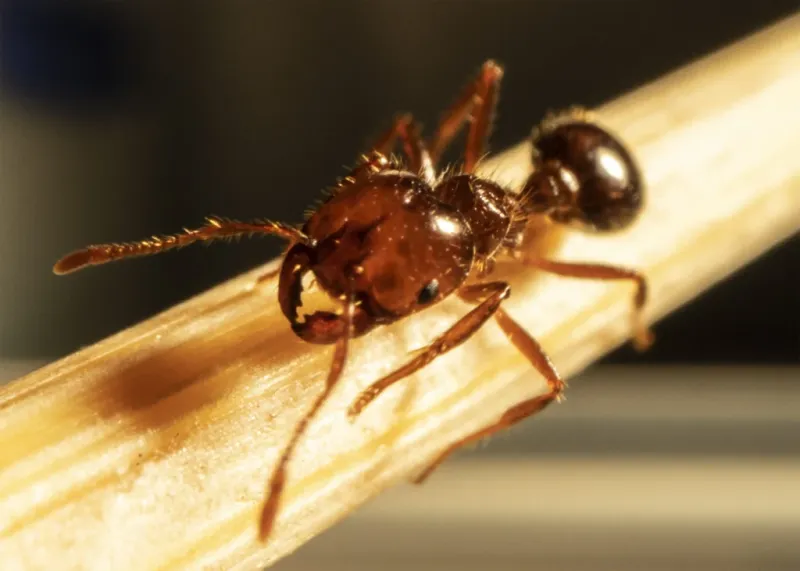
Fire Ant Myth-Busting — Queensland
Why Boiling Water and Petrol Will Not Kill a Fire Ant Queen
Boiling water, petrol, diesel, bleach, and household insect spray can kill worker ants near the surface — but none of them can reach the queen, which lives 30 to 50 cm underground. Without killing the queen, the colony survives and rebuilds within weeks. Worse, disturbing the nest can cause the colony to split and spread.
Understanding why the queen is so hard to kill
Fire ant colonies are built around the survival of one or more queens. Every worker, soldier, and winged reproductive you see above ground exists to protect and feed the queen. The nest architecture reflects this: the queen's chamber sits deep underground — typically 30 to 50 cm below the surface, sometimes deeper in dry conditions — surrounded by a labyrinth of sealed tunnels and multiple brood chambers.
When a fire ant mound is disturbed — by physical impact, heat, liquid, or vibration — worker ants immediately begin evacuating the queen and brood to deeper or alternate chambers. The colony's response time is measured in seconds. By the time boiling water has penetrated 10 to 15 cm of soil, the queen is already moving.
Why boiling water fails
Boiling water is the most commonly attempted DIY fire ant treatment in Australia, partly because it seems intuitive and partly because it does visibly kill ants near the surface. The problem is physics: water cools rapidly as it moves through soil, loses heat to the surrounding earth, and cannot reach or maintain the temperature needed to kill insects at depth.
University research on boiling water treatment of fire ant mounds has consistently found:
- Surface and near-surface workers die on contact, but colonies at depth are largely unaffected
- Colony reduction rates range from 20 to 60 percent at best — with the queen surviving in the majority of cases
- Colonies treated with boiling water often exhibit rapid reconstruction and can recover to pre-treatment population levels within four to six weeks
- Multiple applications are required to achieve even partial population suppression — and each application risks causing the colony to split and establish satellite nests
Pouring large volumes of liquid on a fire ant mound causes worker ants to swarm the surface in defensive response before evacuating. If you are standing near the nest, this dramatically increases your risk of multiple stings — which can cause anaphylaxis in sensitive individuals. Never stand directly over a fire ant mound while applying any liquid.
Why petrol, diesel, and kerosene fail — and why they're illegal
Fuel-based treatments are sometimes recommended in online forums or passed down as folk remedies. They are ineffective, dangerous, and illegal in Queensland.
Why they don't work
Hydrocarbons like petrol kill fire ants on contact through asphyxiation and direct toxicity, but they share the same fundamental problem as boiling water: they cannot penetrate deep enough to reach the queen. Fire ants exposed to petrol fumes at the surface respond by sealing off entrances and evacuating the queen and brood to unaffected chambers. Studies have shown that colonies treated with petrol typically relocate entirely within 24 to 48 hours, establishing new mounds nearby.
Why they're illegal
Using petrol, diesel, or kerosene as a pesticide is prohibited in Queensland under the Agricultural Chemicals Distribution Control Act 1966. These products are not APVMA-registered for pest control use. Pouring hydrocarbons into soil also contaminates groundwater, kills beneficial soil organisms, and creates a genuine fire and explosion risk — particularly in dry conditions. Fines can apply for illegal chemical use.
In Queensland's declared fire ant biosecurity zone, you are required under the Biosecurity Act 2014 (Qld) to report fire ant nests to Biosecurity Queensland — not to self-treat them with unlicensed products. Government treatment may be available at no cost. Call the Fire Ant Contact Centre on 13 25 23.
The myth-by-myth breakdown
Boiling water kills the whole colony
Petrol or diesel will destroy the nest
Dish soap or bleach flushes them out
Store-bought ant powder will do the job
The only effective treatments reach the queen
What actually works against fire ant queens
Proven treatments — approved under Queensland biosecurity protocols
- Fipronil direct nest injection: A licensed pest manager or Biosecurity Queensland officer injects a low-concentration Fipronil solution directly into the nest gallery system through multiple injection points. The active ingredient spreads through the tunnels and reaches the queen's chamber. This is the most reliable method for isolated nest treatment.
- Two-Step bait program: Slow-acting protein-based bait is broadcast around the property and directly around the nest. Worker ants carry the bait underground as food, feeding it to the queen and brood. The delayed kill mechanism ensures the poison reaches the queen before workers die. Effective for large infestations or multiple nests.
- Biosecurity Queensland free treatment: In areas within the declared eradication zone, government officers treat reported nests at no cost to the landholder. Treatment method varies by location and program phase.
Why disturbing the nest makes things worse
Every DIY treatment described above has one thing in common: it disturbs the nest. And disturbing a fire ant nest — in any way — triggers one of two colony responses:
- Evacuation and relocation: The queen and brood are rapidly moved to a satellite location. You may eliminate the original mound but find two or three new mounds appearing within 1 to 3 metres over the following weeks.
- Colony splitting (budding): Under severe stress, a fire ant colony with a polygyne (multiple-queen) structure may split, with each new queen establishing an independent nest. One treated mound can become three or four new infestations within a month.
This is why Biosecurity Queensland's guidelines specifically advise against any disturbance of fire ant nests before professional treatment — including applying liquids, digging, mowing over the mound, or using surface sprays. The risk of causing the colony to spread outweighs any short-term visual reduction in ant numbers.
What to do instead
If you find a fire ant nest in Ipswich or surrounding areas:
- Step away slowly without disturbing the mound
- Keep children and pets away from the area
- Report the nest to Biosecurity Queensland on 13 25 23 or at fireants.org.au — reporting is legally required in the biosecurity zone
- If you need urgent professional treatment (because of risk to children, tenants, or livestock), contact Jets Pest Control for accredited fire ant treatment using approved methods
- Do not attempt to treat the nest yourself with any household product, fuel, or liquid
Jets Pest Control technicians hold current accreditation for fire ant management under Queensland biosecurity protocols. We use only APVMA-registered Fipronil-based products and Two-Step bait programs approved for use within Queensland's declared biosecurity zone. We operate across Ipswich, Springfield, Redbank Plains, Ripley, Collingwood Park, Goodna, and surrounding suburbs. Call us on 1300 566 569.
Frequently asked questions
Will boiling water kill a fire ant queen?
Does petrol kill fire ants?
What actually kills a fire ant colony permanently?
Why can't I just pour bleach or dish soap on a fire ant nest?
Is it legal to use petrol to kill fire ants in Queensland?
Proper fire ant treatment, done right.
Jets Pest Control uses only Biosecurity Queensland-approved methods. No boiling water. No petrol. Just accredited Fipronil treatment that actually reaches the queen.

