
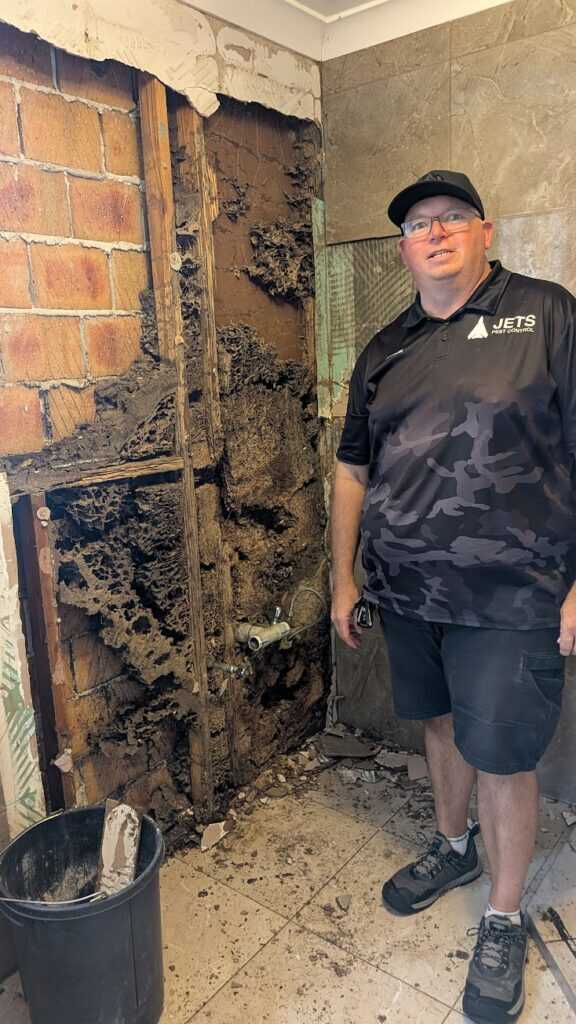
Rental Properties — Termite Liability
Who is responsible for termite damage in a rental property — landlord or tenant?
In the vast majority of cases in Queensland, the landlord bears responsibility for termite damage to a rental property. Termite infestation is a structural maintenance issue, not a consequence of tenant action. The landlord cannot recover these costs from the tenant — and standard home insurance will not pay them either.
The legal framework: what Queensland tenancy law actually says
The Residential Tenancies and Rooming Accommodation Act 2008 (Queensland) establishes the foundational obligations of both landlords and tenants. Section 185 of the Act requires the property owner to ensure the property is in a reasonably clean condition and in a good state of repair at the start of the tenancy. Ongoing obligations require the landlord to maintain the property in a reasonably fit and habitable condition throughout the tenancy.
Termite infestation — and the structural damage it causes — is a maintenance issue that falls squarely within this framework. A timber-framed house that is being consumed by a subterranean termite colony is not in a good state of repair. A floor that flexes because the joists have been compromised is not in a fit and habitable condition. The obligation to rectify this falls on the landlord.
What the landlord must handle
- Cost of professional termite treatment and eradication
- Structural repairs to damaged timbers, frames, and floors
- Annual termite inspections (best practice)
- Chemical barrier installation on high-risk properties
- Responding to tenant reports of suspected activity
- Organising licensed inspector access to the tenanted property
What the tenant must handle
- Promptly reporting suspected termite activity in writing
- Not introducing significant timber that creates conducive conditions
- Providing reasonable access for inspection and treatment
- Not disturbing or attempting to treat suspected termite activity
- Not removing or modifying any existing termite protection systems
When can a landlord recover costs from a tenant?
There is a narrow set of circumstances in which a landlord may have a legitimate argument that tenant actions contributed to a termite infestation. These are exceptional cases, not the norm.
| Scenario | Likely Outcome |
|---|---|
| Tenant installs untreated timber garden edging directly against the house wall, creating soil-to-timber contact that provides a direct termite access point | Potentially shared liability — tenant's actions created a conducive condition |
| Tenant brings untreated firewood or timber stored against the structure, with confirmed active colony in the wood | Potential tenant liability for treatment costs directly associated with introduced material |
| Tenant fails to report visible termite activity (mud tubes, damaged timber) for an extended period despite being aware of it | Potential contribution to claim — delay in reporting may worsen damage beyond what would have occurred with prompt notification |
| Subterranean termite colony active in surrounding soil attacks the structure through normal foraging activity | Landlord's responsibility — standard infestation scenario with no tenant contribution |
| Tenant uses aerosol insecticide on a suspected active termite site, disturbing the colony and causing it to spread | Complex — tenant may bear partial liability for worsening the infestation by DIY intervention |
What a tenant should do when they find termites
The single most important action for a tenant who suspects termite activity is to report it immediately and in writing. This serves two purposes: it triggers the landlord's obligation to act, and it creates a dated record that protects the tenant if the landlord delays and the damage worsens during the delay period.
- Send an email or message to the property manager documenting the specific location, the evidence observed (mud tubes, hollow sound, damaged timber), and the date of discovery
- Take photographs of any visible signs of activity
- Do not disturb the area — do not apply aerosol sprays, break mud tubes, or attempt DIY treatment
- Do not wait for the next routine inspection — request urgent action
- Keep copies of all communications regarding the pest issue throughout the tenancy
What a landlord should do when notified of termite activity
A landlord who receives notification of suspected termite activity in a tenanted property has a legal obligation to respond without unreasonable delay. Queensland tenancy law does not define a specific number of days, but the urgency of the response should be proportional to the potential structural risk — and given that termites can consume 500 grams of timber per day, delays of weeks or months are indefensible.
The appropriate response sequence is:
- Arrange a professional timber pest inspection with a licensed inspector within days of notification, not weeks
- If termite activity is confirmed, proceed immediately with a treatment program
- Where structural damage is confirmed, engage a licensed builder to assess and quote on rectification works
- Keep the tenant informed throughout the process
- Review and implement annual inspection programs to prevent recurrence
Can a tenant leave because of termites?
Where structural termite damage renders the property uninhabitable or an authority (such as a building inspector or local council) declares the premises unsafe for occupancy, the tenant may have grounds to terminate the tenancy without penalty under the Act's provisions relating to the landlord's breach of the habitability obligation.
This is a significant legal step and should only be taken with proper legal advice. The presence of termites alone does not entitle a tenant to immediately vacate. The relevant test is whether the property is in a reasonably fit and habitable condition — and where the landlord is actively working to remedy the situation within a reasonable time frame, the habitability obligation is being met even if the property has a pest problem.
Why annual inspections are the landlord's most important financial protection
Queensland landlords face a significant financial exposure from termite damage that many are completely unprepared for. Standard home insurance does not cover termite damage. The repair costs can range from $7,000 to $100,000 or more for structural remediation. And the rental property is typically leveraged — meaning the damage affects not just the property value but the investor's borrowing position.
Annual professional timber pest inspections — at $185 per visit from Jets Pest Control across Ipswich and Brisbane — are the only financial protection mechanism available. Early detection dramatically reduces repair cost. The inspection cost is generally tax deductible as a property maintenance expense for investment properties. And a documented record of annual inspections significantly strengthens the landlord's position if a dispute arises about the timeline of the infestation.
Jets Pest Control works with property managers across Ipswich and Brisbane to schedule annual timber pest inspections across their portfolio. A written AS 3660.2 compliant inspection report is issued after each inspection, providing documentation for both the property manager's and owner's records. Contact us to discuss portfolio scheduling and reporting.
Protect your investment — inspection from $185
Annual timber pest inspections. Written AS 3660.2 report. The only financial protection available when insurance won't cover the damage.
Book InspectionFrequently asked questions
Who is responsible for termite damage in a rental property in Queensland — the landlord or the tenant?
Can a landlord charge a tenant for termite damage?
Is a landlord required to have a termite inspection on a rental property?
What happens if a tenant finds termites in a rental property?
Can a tenant break their lease due to termites?
How can landlords protect their investment from termite damage?
Ready to protect your home?
Serving Ipswich and South East Queensland — fixed prices, no hidden extras, 10% off for Seniors, Pensioners, and ADF members.
Call 1300 566 569
