
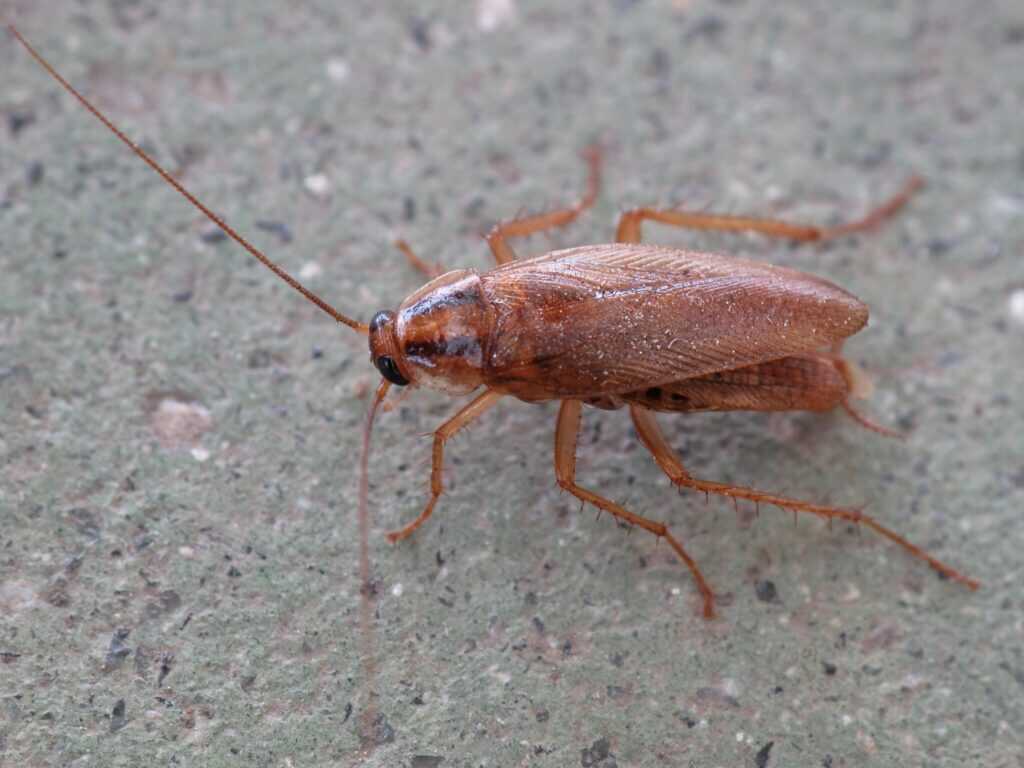
German Cockroaches & Children's Health
How German cockroach infestations trigger severe asthma in children
Cockroach allergen sensitisation in children has been identified as one of the most significant indoor asthma triggers in Australian homes. If a child in your household has been diagnosed with asthma or allergic rhinitis, a cockroach infestation — even a hidden one — may be a contributing factor. A professional treatment is a medical environment intervention, not just a pest control service.
The science: how cockroach allergens trigger asthma attacks
Cockroach allergens are proteins produced by the cockroach's body that become airborne particles when shed as part of normal biological processes. The primary allergens are found in cockroach droppings (faecal particles), saliva, shed cuticle (skin), and body fragments. In a property with an active German cockroach infestation, these particles accumulate on kitchen surfaces, inside cabinet gaps, behind appliances, and in air vents — and they become airborne when disturbed by normal activity such as opening a cabinet, running a fan, or vacuuming.
Once inhaled by a sensitised individual, these allergen proteins trigger IgE-mediated immune responses — the same mechanism responsible for pollen, dust mite, and pet dander allergic reactions. In children who have developed cockroach allergen sensitisation, even low-level exposure can trigger bronchospasm, airway inflammation, and asthma episodes.
The clinical evidence is unambiguous. Research published in peer-reviewed literature consistently shows that cockroach allergen sensitisation is associated with significantly elevated asthma risk in children, with some studies reporting a three-fold increase in asthma diagnosis among cockroach-sensitised children compared to non-sensitised controls. In inner-city and subtropical environments — where cockroach populations thrive year-round — this association is particularly strong.
The full health risk picture: beyond asthma
Asthma is the most researched health consequence of cockroach infestation, but it is not the only one. German cockroaches in residential properties present a broader public health risk that affects all household members.
Cockroach droppings
Faecal particles dry and become airborne within 24 hours of being deposited. They accumulate in kitchen cabinets, drawer corners, and ventilation gaps at concentrations far above the sensitisation threshold in moderate to severe infestations.
Shed cuticle
German cockroaches moult multiple times as they develop from nymph to adult. Each shed skin fragment is an allergen-rich particle. In a large infestation, shed skins accumulate in harbourage sites and are carried into food preparation areas by foraging adults.
Saliva contamination
Cockroaches deposit saliva on food surfaces, utensils, and packaging as they forage. This is the primary vector for bacterial transfer — including Salmonella typhimurium and E. coli — from waste areas to food preparation surfaces.
Body fragments
Dead cockroaches and body fragments desiccate and become lightweight airborne particles that circulate in air currents. These fragments remain allergenically active long after the cockroach has died, meaning an infestation that was treated months ago can still contribute to allergen load in a poorly cleaned property.
Bacterial contamination and food poisoning
German cockroaches are highly efficient vectors for food-borne pathogens. They travel freely between waste areas — bins, drains, sewage pipes — and food preparation surfaces, transferring bacteria on their tarsi (feet) and body. The bacteria most commonly associated with cockroach-vectored contamination include Salmonella typhimurium, E. coli, Staphylococcus aureus, and Listeria monocytogenes.
In a residential kitchen with an active German cockroach infestation, food preparation surfaces, cutting boards, and utensils are regularly contaminated with these pathogens during the night hours when cockroaches forage. The result is subclinical or acute gastroenteritis — often attributed to "a stomach bug" or food poisoning from external sources, with the cockroach infestation never identified as the cause.
Why German cockroach infestations are so difficult to self-identify
German cockroaches are photophobic — they strongly avoid light and confine their activity almost exclusively to the hours between 11 pm and 4 am. During daylight hours, a significant infestation can occupy a kitchen entirely invisibly, with every adult insect concealed in harbourage sites behind appliances, within cabinet wall voids, and inside electrical equipment housing where body heat provides ideal conditions.
A homeowner who has never seen a cockroach in their kitchen may have hundreds — or thousands — of insects living metres from their food preparation surfaces. The first visible cockroach during daytime is not the beginning of the infestation; it is the indicator that the harbourage capacity has been exceeded and adults are being forced into open areas to find space.
Why supermarket cockroach products make the situation worse
German cockroaches (Blattella germanica) have developed significant resistance to many of the active chemicals found in retail aerosol sprays and surface treatments over decades of widespread use. More critically, retail aerosols are repellent products — they drive cockroaches deeper into wall voids and sealed harbourage sites rather than eliminating them. The application of a repellent spray can cause the colony to fracture and relocate to multiple sites throughout the property, making subsequent professional treatment significantly more complex.
Retail cockroach "bombs" or total release foggers share the same problem. The aerosol cloud fails to penetrate the sealed harbourage sites where the population is concentrated — behind refrigerator compressor panels, inside dishwasher motor housings, behind the hinges of kitchen cabinets — and instead coats exposed surfaces with repellent residue. The net effect is a property where food surfaces are chemically contaminated, the cockroach population is disturbed but not reduced, and the infestation has become harder to access.
What professional German cockroach treatment actually involves
German cockroach infestations require a targeted, multi-product treatment approach that addresses the entire breeding cycle — not just the visible adults.
Harbourage assessment and gel bait placement
Commercial-grade gel bait is placed precisely in all identified harbourage sites — behind appliances, inside cabinet hinges, under the dishwasher, within electrical housing voids. The bait is highly palatable to German cockroaches and is consumed by both adults and juveniles, who transfer it to other colony members through trophallaxis (food sharing) and through consumption of faecal matter from exposed individuals.
Residual insecticide application
A residual product is applied to the perimeter of the kitchen and bathroom, behind appliances, and to any other identified harborage areas. This provides a contact-kill zone for cockroaches that exit the harbourage to forage, working in conjunction with the gel bait rather than as a standalone treatment.
Insect Growth Regulator (IGR) treatment
IGR products interrupt the moulting cycle of juvenile cockroaches, preventing them from developing into reproductive adults. This is critical for German cockroach control because the high reproductive rate — a single mated female can produce over 300 offspring in her lifetime — means that any juveniles that survive the initial treatment will rapidly re-establish the population if not addressed.
Follow-up treatment (2–3 weeks)
A follow-up visit two to three weeks after the initial treatment is mandatory for effective German cockroach control. Egg cases (oothecae) attached in harbourage sites at the time of the first treatment will have hatched, releasing new juvenile cockroaches. The follow-up addresses this new generation before they reach reproductive maturity. Without the follow-up, the population will recover within six to eight weeks.
Jets Pest Control offers a two-visit German cockroach treatment program from $360 (initial) + $260 (follow-up) across Ipswich and Brisbane. Both visits are required for effective colony elimination. A 12-month limited warranty applies to the completed program. All treatments are conducted by Queensland Health licensed technicians using APVMA-registered commercial-grade products.
German cockroach treatment from $360
Two-visit program. 12-month warranty. The only treatment that addresses the full breeding cycle — not just the visible adults.
Book TreatmentFrequently asked questions
Can cockroaches trigger asthma in children?
What health problems do German cockroaches cause?
What kills German cockroach eggs?
How do German cockroaches get into a clean house?
How long does professional German cockroach treatment take to work?
How much does German cockroach treatment cost in Ipswich and Brisbane?
Ready to protect your home?
Serving Ipswich and South East Queensland — fixed prices, no hidden extras, 10% off for Seniors, Pensioners, and ADF members.
Call 1300 566 569
